+1-613-733-7999
info[@]rancongress.com


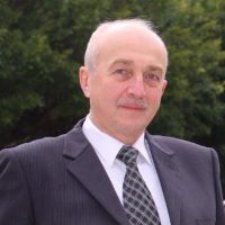
The Hong Kong University of Science and Technology, Hong Kong
Plenary Speaker

Dr. Vladimir G. Chigrinov is Professor of Hong Kong University of Science and Technology since 1999. He is an Expert in Flat Panel Technology in Russia, recognized by the World Technology Evaluation Centre, 1994, and SID Fellow since 2008. He is an author of 6 books, 31 reviews and book chapters, about 335 journal papers, more than 757 Conference presentations, and 121 patents and patent applications including 50 US patents in the field of liquid crystals since 1974. He got Excellent Research Award of HKUST School of Engineering in 2012. He obtained Gold Medal and The Best Award in the Invention & Innovation Awards 2014 held at the, which was hosted in Kuala Lumpur, Malaysia, on 20-22 Feb 2014. He is a Member of EU Academy of Sciences (EUAS) since July 2017. He got A Slottow Owaki Prize of SID in 2018 https://ece.hkust.edu.hk/news/prof-vladimir-chigrinov-wins-2018-slottow-owaki-prize. Since 2018 until 2020 he works as Professor in the School of Physics and Optoelectronics Engineering in Foshan University, Foshan, China. 2020-2024 Vice President of Fellow of Institute of Data Science and Artificial Intelligence (IDSAI) Since 2021 distinguished Fellow of Institute of Data Science and Artificial Intelligence.

University of Wisconsin-Madison, USA
Plenary Speaker
Dr. Quanyin Hu is an Robinson Distinguished Chair, Associate Professor at the School of Pharmacy, University of Wisconsin-Madison (UW-Madison). He received his Ph. D. degree in Biomedical Engineering at the University of North Carolina at Chapel Hill (UNC-CH) and North Carolina State University from 2014-2018. Before he joined UW-Madison, he was a postdoc associate at the Koch Institute for Integrative Cancer Research at the Massachusetts Institute of Technology (MIT) from 2018-2020. Dr. Hu is a newly elected AIMBE fellow and currently serving as the Associate Editor for the Journal of Nanobiotechnology. He has published more than 100 research papers, including Nature Biotechnology (2024), Nature Nanotechnology (2025), Nature Biomedical Engineering, Nature Reviews Clinical Oncology (2026), Nature Review Bioengineering (2024), Science Translational Medicine, with over 15,000 citations. Dr. Hu is recognized as NCI R01 awardee, NIBIB R01 Awardee, NIBIB Trailblazer, American Cancer Society (ACS) Research Scholar, V Foundation Scholar, the MIT Innovators under 35 (TR35) China, the 2023 BMES-CMBE Rising Star Junior Faculty, 2023 Journal of Nanobiotechnology Rising Star, 2022 iCANX Young Scientist, UW Madison Early Career Innovator, Clarivate Highly Cited Researcher (2022-2024), Young Investigator from many societies and Foundations, Emerging Investigator from many journals.

University of Florida, USA
Plenary Speaker

Dr. Peng Jiang is a Professor in the Department of Chemical Engineering at the University of Florida. He earned his Ph.D. in Materials Chemistry from Rice University in 2001. Following his doctoral studies, he joined Corning Incorporated as a Senior Research Scientist. From 2003 to 2005, he was a postdoctoral fellow in the Department of Chemical Engineering at Princeton University. He subsequently held a position as a Materials Scientist at GE Global Research Center. In 2006, Dr. Jiang began his academic career as an Assistant Professor at the University of Florida, where he was promoted to Associate Professor in 2010 and to Full Professor in 2014. His current research focuses on smart shape memory materials, integrated nano-optical devices, stimuli-responsive functional coatings, scalable nanomanufacturing, and biomimetic materials.
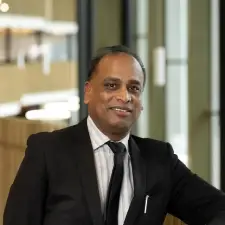
The University of Lancashire, UK
Plenary Speaker
Dr Tapas Sen works in the area of nano and nano-biomaterials chemistry, with more than 30 years of research experience from laboratory scale development to a commercial product. Currently, he is working as a Reader in Nanomaterials Chemistry and leading the Nano-biomaterial Research Group (https://senlabs.org) at the University of Lancashire, UK. He is also the Director and CEO of a spin-off company Nanosen.co.uk; empowering education and research via nanotechnology. Currently, he is running several international projects under the British Council Going Global programme with China and India on Nanotechnology in environmental sustainability, including one funded by the Research Council UK (EPSRC & NERC). He is also leading one project with East Lancashire Teaching Hospital in collaboration with Bruker GmbH, Germany, on SEPSIS. He has successfully completed several projects in the area of Nanomedicine in cancer Theranostics with Royal Blackburn Hospital. He is a Fellow of the Royal Society of Chemistry (FRSC), UK; The Royal Society of Medicine (FRSM), and a Fellow of the Higher Education Academy (FHEA), UK. He is also a member of the Intergovernmental Policy Panel of the Open-Ended Working Group (OEWG-3) for the United Nations for environmental sustainability, a Global committee formed by the Royal Society of Chemistry, UK He is a recipient of Hind Rattan (Indian Jewel) award, presented at Bangkok in 2018 followed Nav Rattan (9 jewels: link "Nav Rattan Award-2023" presented to Dr Tapas Sen from UK by NRI Welfare Society - YouTube) on the occasion of 74th Republic Day, New Delhi, India due to his outstanding contribution of uplifting young researchers through capacity building. One of his British Council Going Global Projects with East China University of Science & Technology (ECUST), China, has recently received the top award for research impact by the Global committee out of 105 projects worldwide and was awarded in front of Ministers in Queen Elizabeth Convention Centre, London, on 28th October 2025. He completed his PhD in Materials Chemistry from the National Chemical Laboratory, India, as one of the premier research institutions in 1997, and worked two years at the Weizmann Institute of Science, Israel (1997-1999), before he moved to the University of Manchester Institute of Science & Technology (2000-2003), Greenwich University (2003-2005), and Kent University (2005-2008) as a postdoctoral research associate (PDRA) and Research Fellow. He joined the University of Central Lancashire (Current name: University of Lancashire since 1st Sept’ 25) in 2008 as a lecturer and was promoted to Reader in Nanomaterials Chemistry in 2015. He is one of the pioneering researchers who developed magnetic nanomaterials with core-shell structure and magnetic porous nanocomposites for the application in MRI contrasting, bio-sensing, cancer Theranostics, pharmaceutical products via chiral catalysis, and separation & identification of toxic chemicals and microbials from water. He has successfully received over £2M in research funding and published more than 80 high-quality original research articles, 4 review articles, 3 book chapters, and a number of conference proceedings. He has developed a commercial product for nucleic acid separation using surface-engineered magnetic nanoparticles in collaboration with Q-bioanalytic GmbH, Germany, and an educational kit for year 10 to 12 students under Nanosen.co.uk. He sits in the editorial board of several peer-reviewed journals and has commissioned several special issues as a guest editor. He is a keen educator who loves to work at the grassroots level with primary & secondary school children to enlighten their scientific minds and extend his outreach to the general public for science education. He has been actively collaborating with the Lancashire Science Festival (News – Nano-biomaterials Research Group (senlabs.org)) from its inception and closely working with the Royal Institution Young Scientist Centre at the University.

Midwestern University, USA
Plenary Speaker
Dr. Volkmar Weissig, Sc.D., Ph.D. (Dr.rer.nat.habil.) is a Tenured Professor of Pharmacology and Pharmaceutical Sciences, and he holds a second non-tenured appointment as Professor of Biomedical Sciences at Midwestern University Glendale, Arizona. He also has an appointment as Adjunct Faculty in the College of Pharmacy at the University of Florida in Gainesville. Dr. Weissig received his B.S., M.S. and Ph.D. degrees in Chemistry and his postdoctoral Sc.D. degree (habilitation) in Biochemistry and Pharmaceutical Biotechnology from the Martin-Luther University in Halle (Germany). Combined he completed several years of postdoctoral fellowships at the Cardiology Research Center in Moscow (Russia), at the Academic Department of Medicine at the Royal Free Hospital School of Medicine in London (UK), at the Institute of Organic Chemistry at the Czechoslovakian Academy of Science in Prague (CSFR), at the College of Pharmacy and the College of Medicine at the University of Florida, Gainesville, FL and at Harvard Medical School and Massachusetts General Hospital in Boston, MA. Before joining the faculty at Midwestern University, Dr. Weissig was an Assistant Professor of Pharmaceutical Sciences at Northeastern University in Boston, MA. Dr. Weissig holds 16 patents, and he has published over 130 research papers, review articles and book chapters, mostly in the areas of nano drug delivery systems and mitochondrial medicine. He also edited and published 11 books. He serves as the Editor-in-Chief of the Journal of Liposome Research, and as the Editor-in-Chief of the Journal of Mitochondria, Plastids and Endosymbiosis, he is also member of several other Editorial Boards among them for 4Open. In July 2009 he was inducted into the World Technology Network as a Fellow. In October 2014 Dr. Weissig was elected President of the World Mitochondria Society. In April 2023 he was elected as Ordinary Member of the European Academy of Science and Arts (Salzburg, Austria).
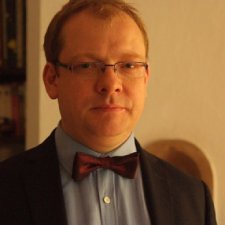
Wroclaw Medical University, Poland
Invited Speaker
Witold Musiał is a Full Professor and Head of the Department of Physical Chemistry and Biophysics, Wroclaw Medical University, Poland. He earned his PhD in the field of pharmaceutical sciences, focusing on ionic equilibria in polymeric systems proposed for topical drug delivery. Professor Musiał continued postdoctoral research in the frames of Marie Curie Fellowship at the Technical University of Maribor and at the Institute of Macromolecular Chemistry in Prague, where he explored synthesis and evaluation of thermosensitive microstructures and nanostructures for medical applications. His research interests include controlled drug delivery and evaluation of physical phenomena observed in acting drug dosage forms. Scientific team of professor Witold Musiał is concentrated on several topics in that field: surface and interfacial phenomena in pharmaceutical sciences, electrochemistry in pharmaceutical sciences, synthesis and application of polymers as hydrophilic matrices, nanoparticles and microparticles for controlled and targeted drug delivery, R&D of pharmaceutical and medicinal products and pharmaceutical analysis. Professor Witold Musiał is lecturer in the field o pharmaceutical sciences, including physical chemistry and biophysics for pharmacists, physics in pharmacy for Qualified Persons in pharmaceutical industry, and pharmacokinetics. Coworker of pharmaceutical industries. Visiting researcher and lecturer of universities in Europe and USA.